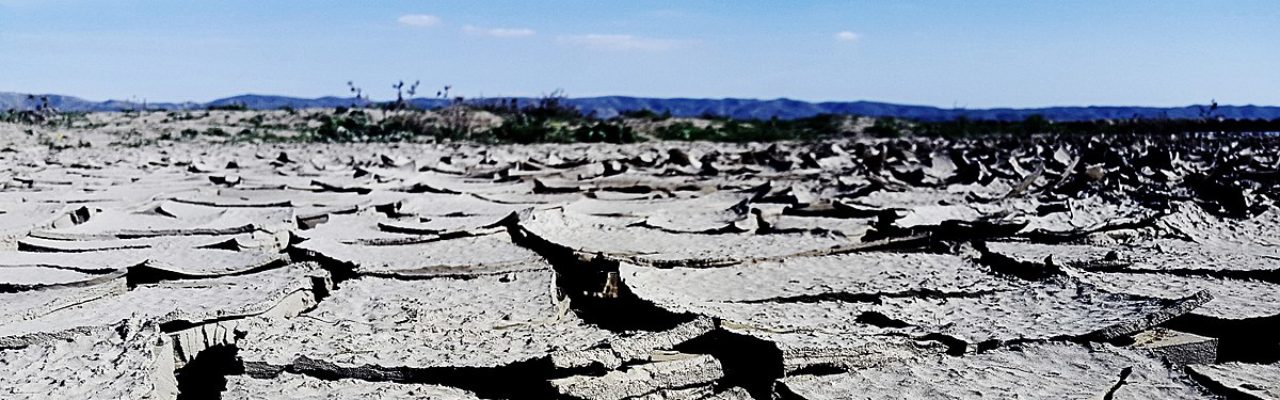
“Generating three centimeters of topsoil takes 1,000 years, and if current rates of degradation continue all of the world’s topsoil could be gone within 60 years” – Maria-Helena Semedo, United Nations Food and Agriculture Organization (FAO)
There are many ticking environmental time bombs that can cause human civilization to collapse, but the end of topsoil might just be one that will pull the rug out from under us. In fact, we are already one third the way there. Yes, one third of all the world’s topsoils has been already degraded in the past 40 years.
At the current rate of the planet’s topsoil degradation and erosion, agriculture might only last 60 years. But it’s quite reasonable to believe that civilization will collapse much earlier before the last topsoil runs out. We don’t even have to use up all the planet’s soils before the greatest famine the world has ever seen will break out. Just 5% of the world’s people not getting enough to eat translates to 380 million starving people. That’s more than the entire population of the United States and South Korea combined.
What is topsoil and why is it so important?
Topsoil is the uppermost layer of soil, in places where it is still intact, where there is the highest concentration of organic matter and microorganisms. Topsoil absorbs carbon and retains water, air and nutrients. It is where the vast majority of biological activity in the soil occurs.
The depth of topsoil varies greatly from locality to locality. But generally, it may only be topmost two inches. Below the topsoil layer is the subsoil which is far more densely packed and poor in air, nutrients and water. Without topsoil, little plant growth can occur. Without topsoil, you are looking at best at barren scrubland.
Topsoil is the one of the planet’s most valuable resources. It has supported agriculture and fed human civilization which allowed us to grow to our present numbers. Despite advancements that have lessened our reliance on soil as our primary source of food, like hydrophonic farming and aquaculture, 95% of the world’s food still comes from soils. In short, there is no escaping our reliance on the land and its topsoil to feed the 7.6 billion people of the world.
What is causing topsoil erosion and degradation?
The main culprit to topsoil erosion and degradation is our own agriculture. The vast majority of world’s agricultural practices, which rely on monocrop cultivation (planting only one type of crop in a given area at the time), is extremely unnatural. In such practices, weeds and other form of vegetation that might naturally hold the topsoil in place are absent. This erodes and degrades topsoil overtime. Much worse is that the majority of crops we rely on to feed the majority of our population, such as corn and wheat, rely on harvest crops which leave topsoil exposed in between growing seasons. This is the worst time for topsoils. Without ample plant cover, wind and water quickly erode topsoil.
Overgrazing by livestock is part of our unsustainable agricultural system. When a pasture land is overgrazed, the vegetation that normally protects topsoil from erosion and degradation is lost. And once the topsoils are degraded far enough, no new vegetation can grown to replace it.
Deforestation and global warming accelerate help the process of topsoil erosion and deforestation.
Once an area is deforested, the topsoil is left exposed. There is not enough time for other forms of vegetation to grow and protect the topsoil. It takes years for sufficient vegetation to replace the forest growth. When the topsoil is exposed, it is easily carried of by rain and wind. Deforestation also speeds up the erosion and degradation of topsoils in surrounding areas, such as adjacent forests and agricultural areas. Forests stabilize water flows, so without them water can more easily carry away the topsoil with all their valuable nutrients.
Climate change accelerates topsoil degradation and erosion as well. Hotter, drier climates lead to drier vegetation and soils which makes topsoil more vulnerable to erosion. Increased flooding due to changing weather patterns worsens erosion as well.
There are numerous causes of degradation of the world’s topsoils. This study by the United Nations Food and Agriculture Organization released in 2015 (link directs to the downloadable pdf) is the most comprehensive analysis available on the status of world’s soil resources.
Perhaps the greatest underlying cause of this erosion is that we have taken topsoil for granted. Topsoil is the planet’s most overlooked and undervalued resource. We have been withdrawing far, far more from our ecological bank account than is being replenished. And now the contents of this ecological bank account are running out.
Since the dawn of agriculture, humanity’s most pressing concern was only to grow as much food as possible as quickly as possible. The topsoil supply of a future generation was inconceivable to pre-modern agriculturalists. After all, soil seemed to be everywhere in an inexhaustible supply. Now we are caught in a trap. With the size of our planet’s present population of 7.6 billion and counting, once the planet’s topsoil runs out a truly global catastrophe like no other is likely to ensue.
Doesn’t topsoil form after a while?
What most people don’t realize is topsoil is practically a non-renewable resource. How long does it take topsoil to form? There are no hard and fast numbers because the formation of topsoil depends on quite a number of factors. These factors include the availability of organic material, the type and availability of parent material (the rock we start with), the vegetation in the area, climate, and topography among others.
The most optimistic figure I’ve come across state that in the wettest and warmest jungles, it takes around one century to make an inch of topsoil. Many sources cite the figure of approximately two hundred years for an inch of topsoil in similar wet and warm climates. Most men don’t live in jungles, though (which despite its appearances actually have very poor topsoil). In places characterized by a “mild climate”, like the regions in the US where most crops are grown, an inch of topsoil can take from 100-500 years. And of course, there was that terrifying quote from the UN official who gave the figure of 1,000 years to form three centimeters of top soil, which is probably true for most food-growing regions in the world. No matter how you look at the numbers they are bad news.
This means for the sake of most people and their children and grandchildren, they are practically as non-renewable as petroleum or minerals . The message is clear: Once topsoil is lost, there’s no getting it back.
Today, the world is living on the edge of steep cliff, and we are blindly marching towards its edge – to a tune of 30 soccer fields a day. This is the amount of arable land we are losing every single day.
Can’t we just expand to new agricultural lands with good topsoil?
While it can be tempting to think that there is a lot more room for develop new agricultural lands with a fresh supply of topsoil this is simply untrue. Today, practically all the good arable land in the world is already being exploited by humans for agriculture. In fact half of all the habitable land in the world already is being cultivated by man. The rest of it is unsuitable for agriculture or is reserved for the last remaining stands of the world’s shrinking forests.
It is only in fringe areas, like arid lands, mountains, rainforest (which despite their appearance actually have very poor soil fertility) that agriculture can possibly expand. However, the overall yield in these unproductive areas will do little to stop the decline in the overall supply of arable land. For now, we can discount planting crops in the Arctic Circle or the Sahara Desert as a mankind’s future saviour.
The end of topsoil is nearing. And the the future looks bleak.
Will a slowing population growth save us?
“But the world’s population growth is actually slowing. Won’t this help save us?” While it is true that the world’s demographers have taken noticed that overall the world population growth is slowing, this will have negligible effect on this impeding global catastrophe brought about by the shrinking supply of topsoil.
First, population growth hasn’t come to a grinding halt yet. The regions where population growth will continue to be high are also where the food supply is most precarious. Particularly vulnerable are some parts of Asia and Africa where growth rates will continue to be high for the next coming decades.
Second, the world is experiencing a massive growth of the middle class, particularly in China and India. This new middle class will have a much greater level of disposable income compared to the previous generation. And not only will they demand a larger amount of food, they will demand more environmentally-demanding kinds of food (read: meat). While the average Indian and Chinese peasant of fifty years ago ate mostly plant-based foods, a middle-class citizen in China and India is wont to want much more meat in his diet and is willing to spend for it. The problem here is that meat production takes a lot more land, water and energy than the foods their parents and grandparents. This ultimately puts enormous pressure on our existing agricultural lands leading to more topsoil degradation.
In other words, even if their population remains about the same, the pressures they put on their topsoils will be many times greater.
Will mankind be able to just produce much more food with technological advancements with what little topsoil he has left? Perhaps, but it seems like for now, the answer is “No.” While world food supply has been jumping ahead of population growth in the past centuries, this may not be the case in the future. Scientists have observed that the world has already entered an era of “Peak Food” production. This means that staples foods from corn and rice to wheat and chicken slowing in growth. (Read more about “Peak Food” in this article about Famine and Global Food Shortages).
Will the end of topsoil that takes away our very capability to feed ourselves serve as the final guillotine that shall behead the wanton and carefree days of mankind as we know it?
.jpg)
Scenario: What if the World’s Topsoil Runs Out?
Obviously, a world without topsoil cannot sustain civilization, so let’s dial back the clock. Let’s do a mental exercise on how global affairs will develop as topsoil starts running out.
An increase in the middle-class with greater disposable incomes in developing countries, particularly among the 1.2 billion people of India and 1.3 billion people of China will cause (and is causing) an unprecedented demand on global food supplies. Their own topsoils will (and already are becoming) become highly-degraded, among a slew of other agricultural problems. They will become ever more reliant to importing food from outside their borders.
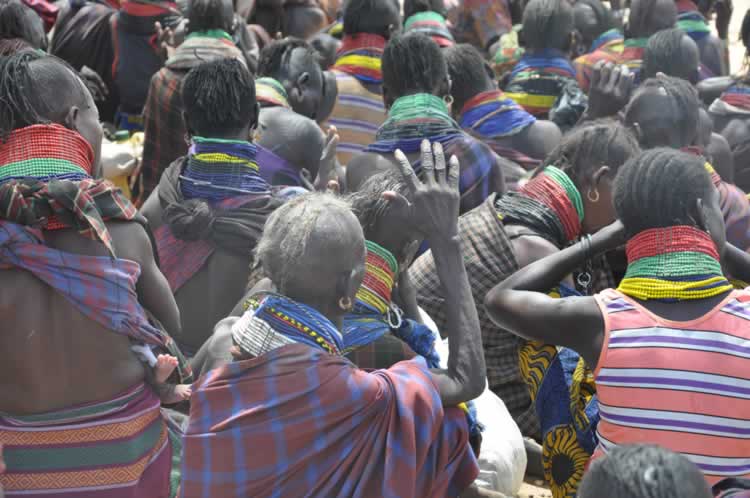
This will cause global food prices to shoot up. In places where there is a weak supply and distribution of food because of economics, the average family will no longer be able to afford enough to eat. Regions such as Sub-Saharan Africa and parts of Asia will experience massive famines.
Protectionism and radicalism will rise with global inequality and increased poverty. Terrorism and immigration will be on the top of agendas of many states.
Food security will become ever more closely tied with national security. Trade barriers and protectionist policies may be set up by some countries. Yet, they will not address the core problem of shrinking agricultural capacity due to topsoil degradation.
Some advanced countries may realize the dangers of allowing their topsoils to degraded, and start to closely manage their topsoils. But this may be too little, too late.
Countries which have short-sighted or weak governments will not be able to adapt and manage their topsoils in time. Many of these countries will already be heavily affected by climate change and have suffering economies. The irony is that during this time the overall global economy may continue to improve and increase in volume, as industrial production continues to expand. As the overall supply of land with arable topsoil lessens, this means that pressure on the existing farmlands will increase, lead to faster loss of this precious resource.
In places where there is an insufficient food supply, either due to topsoil degradation or plain economics, cycles of famine will trap the affected regions. They will not be able to invest in the long-term sustainable agricultural practices and technologies necessary.
While some countries might be able to successfully slow their topsoil degradation, it will continue to runout everywhere else. Pressures on the topsoils in countries around the world will intensify as more pressure is put on the land. Climate change, water shortages and deforestation will hasten the process of topsoil degradation.
A lack of food (or rather their high prices) will cause new radical elements to rise in acutely affected societies. Social discontent and fighting will break out in many countries, both internal and international as it spills out of borders.
While new technologies can develop, such as new genetically modified organisms, hydrophonic farming and aquaculture, these may not be enough. More importantly, these technologies might not spread to where they are needed most.
The world’s pie of overall arable land with sufficient topsoil supply will continue to a shirk, until a tipping point will finally be reached. Reverbration will be felt through the global economy leading an irreversible recession.
Governments will be placed under increased pressure. Some may eventually collapse or just gradually crumble under the pressures of society and descend into lawlessness. When this happens, no drastic actions to promote sustainable agriculture, such as the preservation of topsoils can be organized.
The world will be trapped in vicious cycles exacerbated by running out of topsoil. Civilization as we know it would collapse. The end of topsoils is the end of civilization.

Suggested Further Reading:
The End of Topsoils is just one of cause of future global famine. Here are eight more: Global Famine and the End of the World: 8 Reasons Why Famine and Global Food Shortages will Change the World Sooner Than You Think
You want to prepare for the upcoming global famines and food shortages. But how do you do this? Do NOT rely on planting the same vegetables you see in your supermarket. Grow heirloom vegetables: The Heirloom Seed Encyclopedia for Preppers and Survivalists